
Carriage Shoppe has published new consumer guidance explaining why corrosion protection can be an important part of auto body repair when collision work affects factory-applied coatings, seams, attachment areas, or exposed metal surfaces.
The October resource focuses specifically on corrosion protection during the repair process rather than on the visible refinishing of a repaired panel. It explains how collision damage and certain repair operations can disturb protective materials originally applied to vehicle components and why applicable corrosion-protection procedures may be considered before repairs are completed.
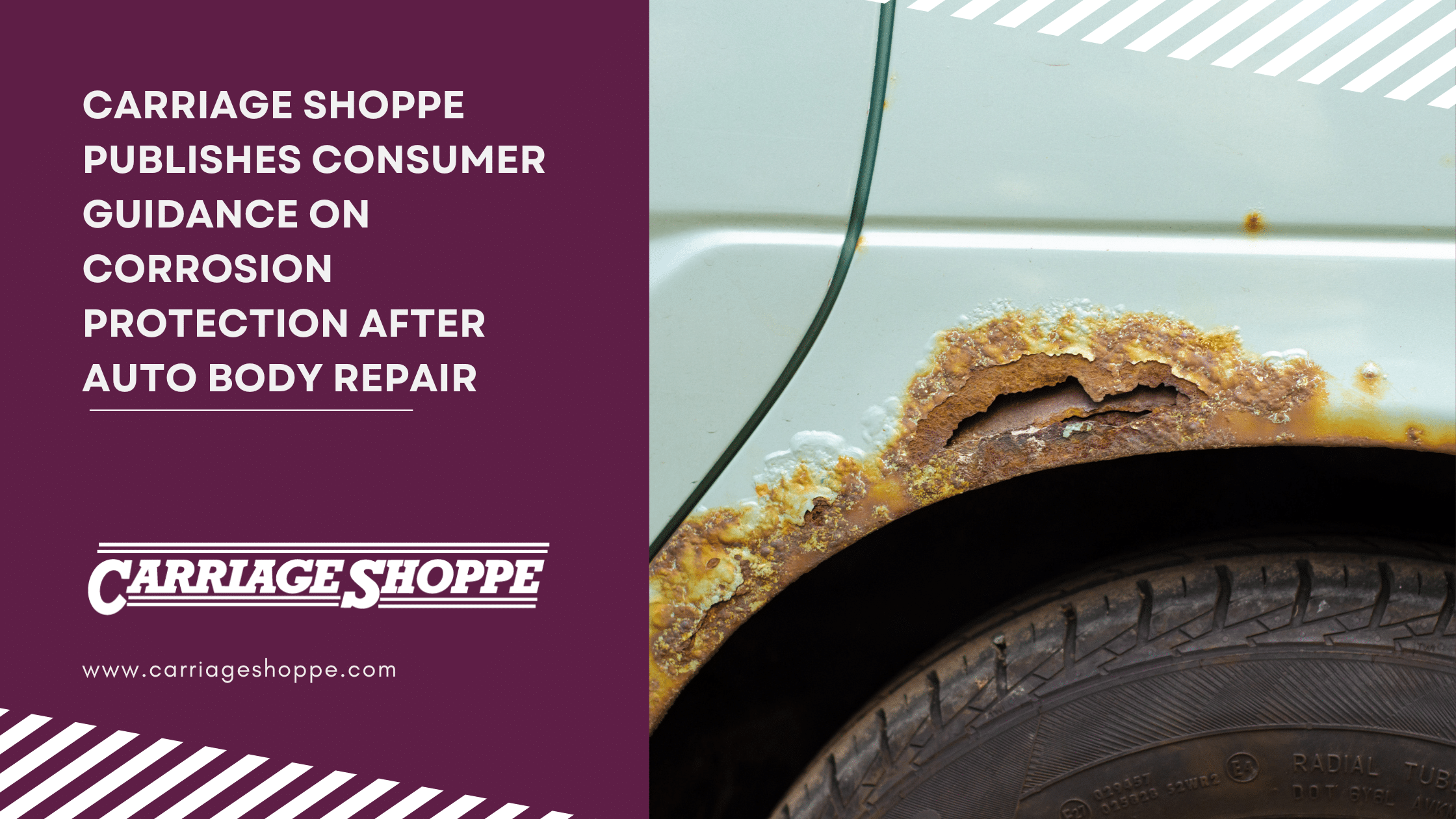
Modern vehicles use multiple methods to help protect metal components from environmental exposure. Depending on the vehicle and component, these can include primers, seam sealers, cavity protection, underbody coatings, and other factory-applied materials.
When collision damage or the repair process affects those protective layers, restoring applicable corrosion protection can become part of the documented repair procedure.
Additional information about repairing and refinishing damaged vehicle components is available through Yoder Collision Network's auto body repair information.
The October guidance begins with the relationship between collision damage and exposed metal. A dent, crease, scrape, or deformation can damage more than the visible painted surface. In some cases, an impact can affect paint, primer, or other protective layers and expose the underlying material.
Repair operations themselves can also affect existing protection. Straightening, sanding, welding, sectioning, panel replacement, or removing damaged material may alter coatings or sealed areas associated with the component being repaired.
The need for corrosion protection is therefore evaluated in relation to the individual component and repair operation rather than simply according to whether visible rust is already present.
Panel replacement provides one example. Depending on the vehicle and affected area, replacing a damaged component can involve removing factory attachment points and installing another panel using manufacturer-specified joining methods. Areas affected by those operations may have corresponding requirements for primers, seam sealers, cavity protection, or other materials.
The purpose is not to apply the same corrosion product to every repair. Different areas of a vehicle can have different materials, construction methods, exposure conditions, and manufacturer procedures.
Seams and joining areas are another focus of the October resource. Vehicle body structures can contain overlapping panels and joints where protection from moisture and contaminants is important. When collision repair involves one of these areas, the repair procedure may include restoring applicable sealing or protective materials.
This can be less visible to consumers than exterior paint because some corrosion-protection operations occur behind panels, within cavities, along seams, or on the underside of repaired areas.
The guidance therefore distinguishes refinishing from corrosion protection. Exterior refinishing restores the appearance and surface finish of repaired components, while corrosion-protection procedures can address areas that are not readily visible after the vehicle is reassembled.
Both may be associated with the same repair, but they serve different purposes within the repair process.
Additional information about how individual body repairs fit into a larger collision repair plan is available through Yoder Collision Network's collision repair information.
Material identification can also influence corrosion-related procedures. Modern vehicles can incorporate conventional steel, high-strength steels, aluminum, and other materials within different body and structural areas.
These materials do not necessarily use identical repair or protection methods. The affected component, its construction, the repair operation, and the materials involved can influence which procedures and products are applicable.
Manufacturer repair information provides technical direction for these situations. Depending on the vehicle and operation, manufacturer procedures may address preparation of bare metal, primers, seam sealing, cavity protection, underbody coatings, weld-related protection, or other steps associated with repaired and replaced components.
Yoder Collision Network provides additional information about manufacturer-specific repair considerations through its OEM certification information.
The October guidance emphasizes that corrosion protection is connected to the areas disturbed during the repair. A panel with cosmetic surface damage may involve different considerations from a component that requires welding, replacement, or work around a factory seam.
This component-specific approach helps explain why corrosion-protection operations can vary even between repairs that appear similar from outside the vehicle.
Access can also influence when these procedures are performed. Some protective materials must be addressed while components are removed or before previously accessible areas are covered during reassembly. Repair planning can therefore identify applicable corrosion-protection steps alongside the body and structural operations associated with the damaged area.
The new resource also clarifies that corrosion protection after collision repair is not the same as treating existing unrelated rust. Its focus is on restoring applicable protection in areas affected by collision damage or repair operations.
That distinction keeps the repair scope connected to the documented accident damage and the procedures required for the affected components.
For consumers, corrosion-protection work may be less apparent than a repaired dent or newly refinished panel because much of it can be located beneath the finished surface. The October guidance provides context for why repair documentation may include primers, sealers, coatings, or related materials even though those items are not readily visible when the completed vehicle is inspected from the exterior.
By publishing the October guidance, Carriage Shoppe is adding a corrosion-protection-specific explanation to its existing consumer repair information. The new material concentrates on what can happen to protective coatings and sealed areas when collision-damaged components are repaired or replaced and how vehicle-specific procedures can inform their restoration.
The central takeaway is that auto body repair involves more than restoring the visible shape and finish of a damaged component. When repair operations disturb applicable factory-applied protection, corrosion-related procedures can become another documented part of restoring the affected area.
Carriage Shoppe is part of Yoder Collision Network and provides collision and auto body repair services at 327 S Link Ln, Fort Collins, CO 80524. The facility provides body and structural repair, refinishing, vehicle measuring, diagnostic procedures, and related collision repair services.
###
For more information about Carriage Shoppe, contact the company here:
Carriage Shoppe
Micah
970 482 3597
officestaff@carriageshoppe.com
327 S Link Ln, Fort Collins, CO 80524